
A Thought Leadership Perspective Ahead of the African Green Hydrogen Summit 2026.
By Dr Chris Ettmayr
When most people hear the term green hydrogen, they think about exports, billion-rand investments, and the future of energy. Few thinks about manufacturing jobs in East London.
Perhaps they should.
As Africa prepares for the African Green Hydrogen Summit (AGHS) 2026, to be held on 15 and 16 September at the Century City Conference Centre in Cape Town, the conversation is shifting from ambition to implementation. The focus is no longer simply whether hydrogen has a future. It is where that future will take root first and what tangible economic value it will create.
For South Africa, that question cannot be answered by looking at renewable energy resources alone. The real opportunity lies in understanding how hydrogen can solve practical industrial challenges that already exist today.
The Eastern Cape offers an interesting test case.
This is a province that knows manufacturing. It knows logistics. It understands exporting to demanding international markets. It is home to an automotive industry that competes globally and supports thousands of jobs across complex supplier networks. But like the rest of South African industry, it is also confronting a changing reality.
Energy costs are rising. Carbon compliance requirements are becoming stricter. International customers are asking tougher questions about the emissions embedded in products and supply chains. Competitive advantage is no longer determined solely by quality and price. Increasingly, it is also determined by carbon intensity.
That is where hydrogen enters the conversation.
Not as a silver bullet. Not as a fashionable energy technology. But as a practical industrial input with the potential to help manufacturers remain competitive in a rapidly changing global economy.
The mistake often made in discussions about hydrogen is to view it purely as an energy project. In reality, the most interesting hydrogen developments around the world are industrial development projects.
Hydrogen needs customers.
Without industrial users, a hydrogen plant is simply producing a molecule in search of a market.
Successful hydrogen economies emerge when production sits close to demand. They emerge where manufacturers can use hydrogen to replace diesel, liquefied petroleum gas, heavy fuel oil, or other fossil fuels. They emerge where infrastructure already exists and where logistics costs can be minimised.
This is why industrial development zones matter.
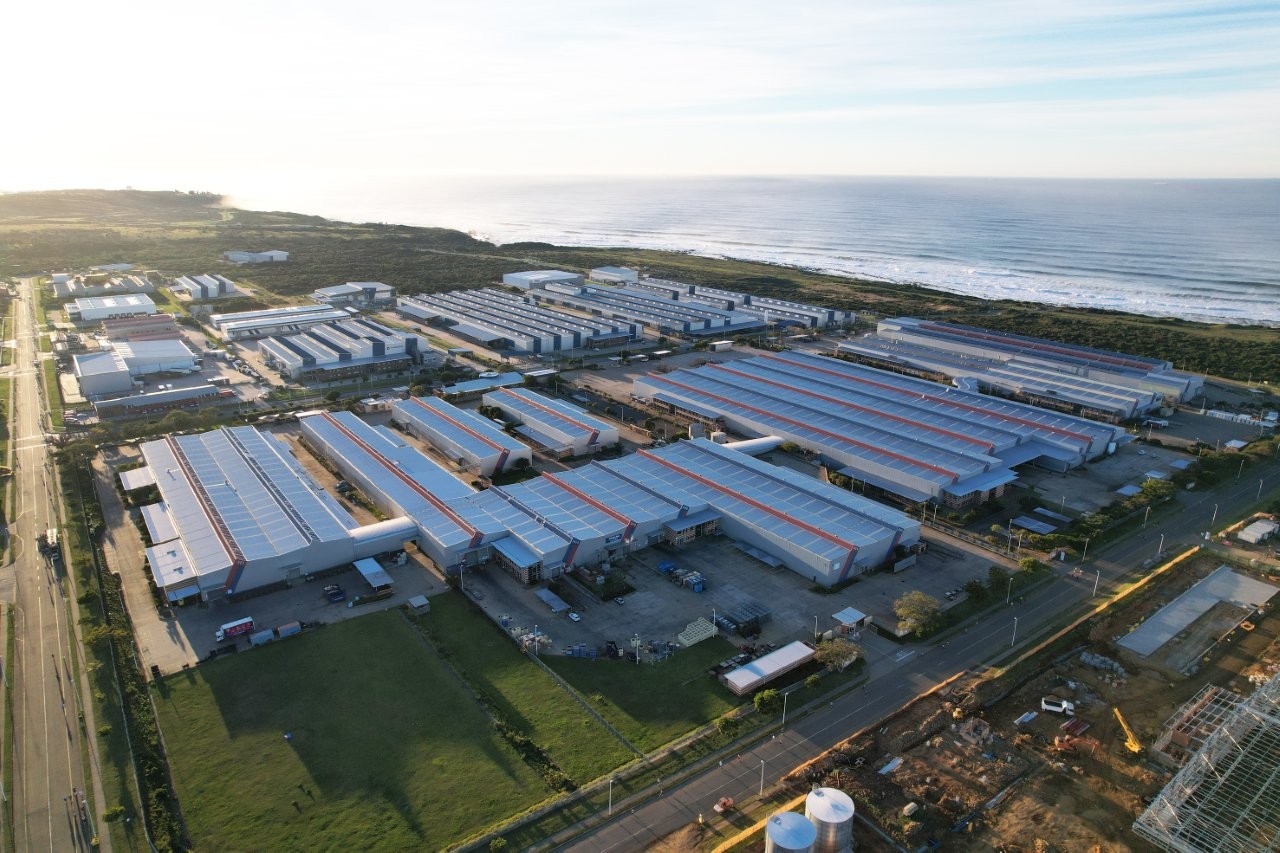
They provide a ready-made ecosystem. They bring together industrial land, infrastructure, investors, regulatory support, and manufacturers facing growing pressure to decarbonise.
In South Africa, that creates a compelling opportunity for Special Economic Zones and Industrial Development Zones to become the foundations of the emerging hydrogen economy.
The East London IDZ (ELIDZ) is a case in point.
What makes the ELIDZ particularly interesting is not that it has a hydrogen project under development. Many regions have projects on paper.
What distinguishes the ELIDZ is the convergence of assets already in place.
It has access to industrial customers. It sits alongside a functioning port. It has available land. It has existing seawater infrastructure that creates opportunities for desalination. It has established investor facilitation mechanisms. And it has built a reputation as South Africa’s leading eco-industrial park.
From an investor perspective, this matters.
One of the greatest risks facing any hydrogen project is not technology. Electrolysers work. Renewable energy works. Desalination works.
The challenge is integration.
Can water, electricity, logistics, and customers be brought together in a way that creates a sustainable business case?
That is ultimately the question being tested in industrial/special economic zones around the world.
For the Eastern Cape, hydrogen also presents an opportunity that extends beyond energy.
Water security is becoming an increasingly important economic issue. Manufacturers require certainty of supply to invest and expand. The integration of desalination infrastructure with future hydrogen developments could help support industrial growth while reducing pressure on conventional water resources.
At the same time, hydrogen opens opportunities to stimulate additional renewable energy investment, strengthen energy resilience, and support lower-carbon manufacturing.
These outcomes should not be viewed separately.
They are interconnected.
The debate is therefore not simply about producing green hydrogen. The debate is about creating a more resilient industrial ecosystem.
That is an important distinction.
Sometimes, South Africa approaches emerging sectors as stand-alone industries. The real value comes when new industries strengthen existing ones.
Hydrogen should help the automotive sector become more competitive. It should help manufacturers reduce exposure to future carbon costs. It should help attract investment into industrial infrastructure. It should help create new technical capabilities and skills.
If it achieves those outcomes, then hydrogen becomes more than an energy transition project.
It becomes an industrial development project.
As delegates gather at AGHS 2026, discussions will rightly focus on production targets, investment pipelines, and export opportunities. Those conversations matter. But there is another discussion that deserves equal attention.
How do we ensure hydrogen contributes to local industrial growth?
How do we use it to strengthen manufacturing regions?
How do we translate clean energy into jobs, new investment, and greater competitiveness?
The regions that answer those questions first are likely to lead the next phase of the hydrogen economy.
For the Eastern Cape, and for industrial platforms such as the East London IDZ, that opportunity is already beginning to take shape.
The future hydrogen economy will not be built by producing molecules alone.
It will be built by turning those molecules into industrial growth. And that is a conversation worth having as Africa’s hydrogen sector gathers in Cape Town this September.
The hydrogen economy will not ultimately be won by those who make the biggest announcements or publish the most ambitious targets. It will be won by regions that can translate opportunity into industrial activity, investment into infrastructure, and innovation into jobs.
For the Eastern Cape, the real opportunity lies not only in exporting a new commodity, but in using green hydrogen to strengthen manufacturing, deepen industrial resilience, and position the province at the centre of South Africa’s next chapter of industrial growth. That is the opportunity. The question is no longer whether hydrogen is coming. It is whether we are ready to lead.
Issued by ELIDZ
For media enquiries:
Mr Siphosethu Tikana
Acting Manager: Marketing & Corporate Communications
Email: siphosethuti@elidz.co.za
Tel: 064 900 8392 / 076 800 5317